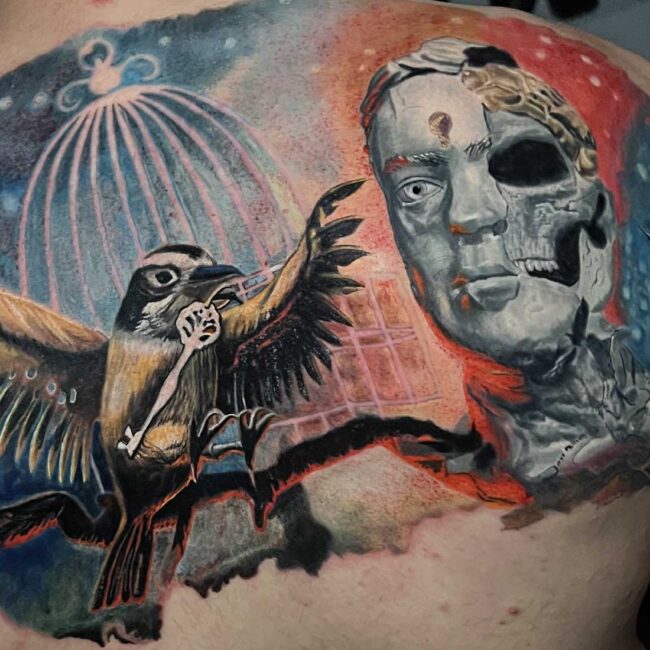


Few art forms command a room quite like Irezumi. Before your eyes even settle on the coils of a dragon or the delicate edge of a cherry blossom, something else happens first. The room gets quieter. You feel the sheer visual weight of the heavy black wind bars framing the design. It is an aesthetic that operates on a completely different scale, less about mimicking a photograph and more about carving an unyielding presence onto the human form.
For serious collectors looking for Japanese traditional tattoos in Tampa, this isn’t just body art; it’s an armor worn in ink that requires an investment of patience, pain, and absolute respect for tradition. Yet the history of this master craft is a complex paradox, a journey whose roots stretch back to some of Japan’s earliest tattooing traditions, traveling through the fierce visual language of the outlaw underground before establishing itself as a global symbol of serious tattoo collecting.
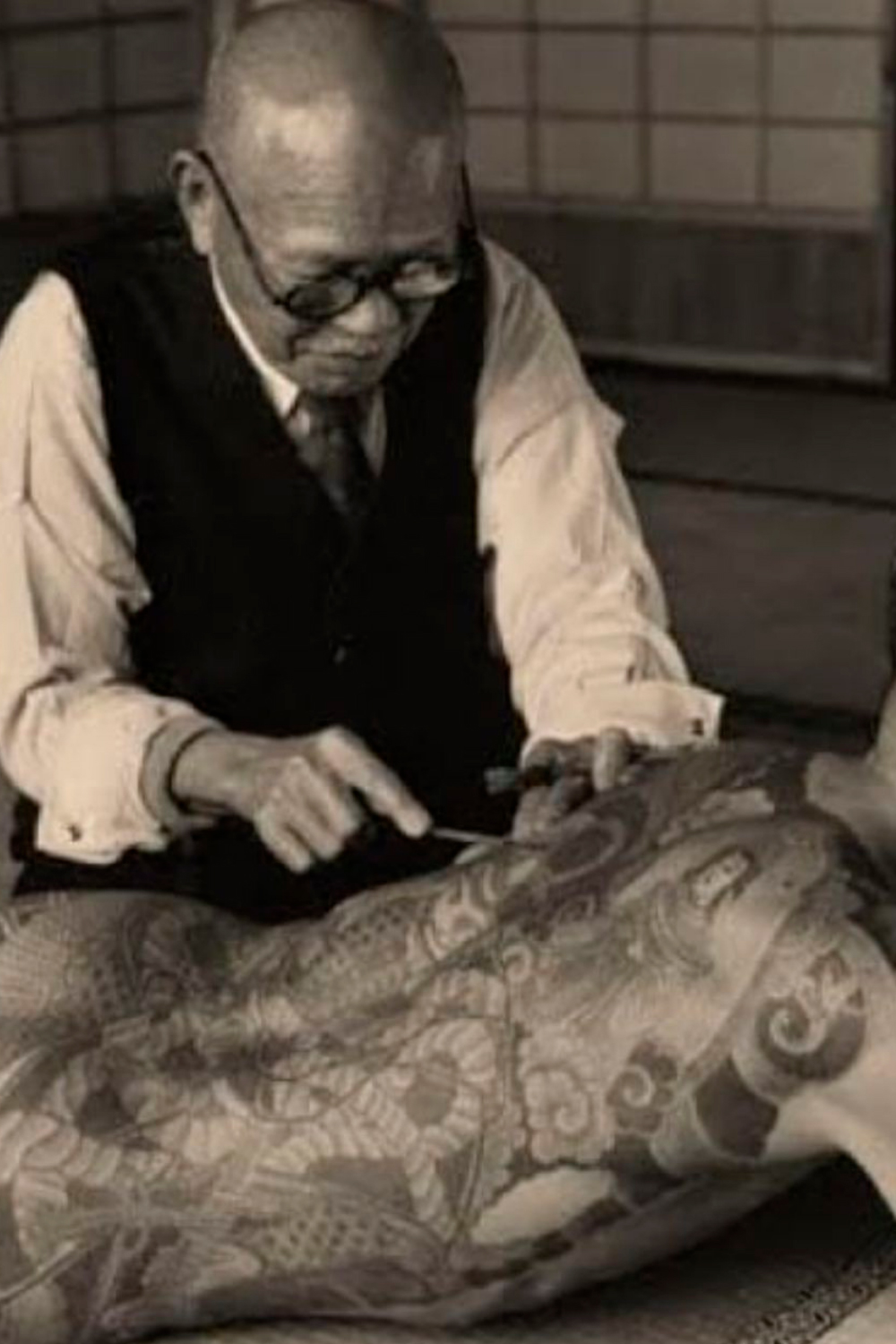
To understand Japanese traditional tattoos, you have to peel back more than a thousand years of history. During the Edo period (1603–1867), the government used tattoos as criminal punishment, branding lawbreakers with visible marks on their arms or foreheads.
But culture is rarely obedient. Instead of hiding their shame, many individuals began covering those punitive marks with decorative designs. They drew inspiration from Suikoden (The Water Margin), a popular novel about heroic outlaws. At the same time, the master woodblock printers of Edo, the Ukiyo-e artists, translated the fluid movement of water, fire, and smoke from paper to flesh. When the Japanese government officially banned tattooing in the late nineteenth century, Irezumi moved almost entirely underground, becoming closely associated with the Yakuza and transforming a mark of exile into a hidden symbol of loyalty, resilience, and forbidden beauty.
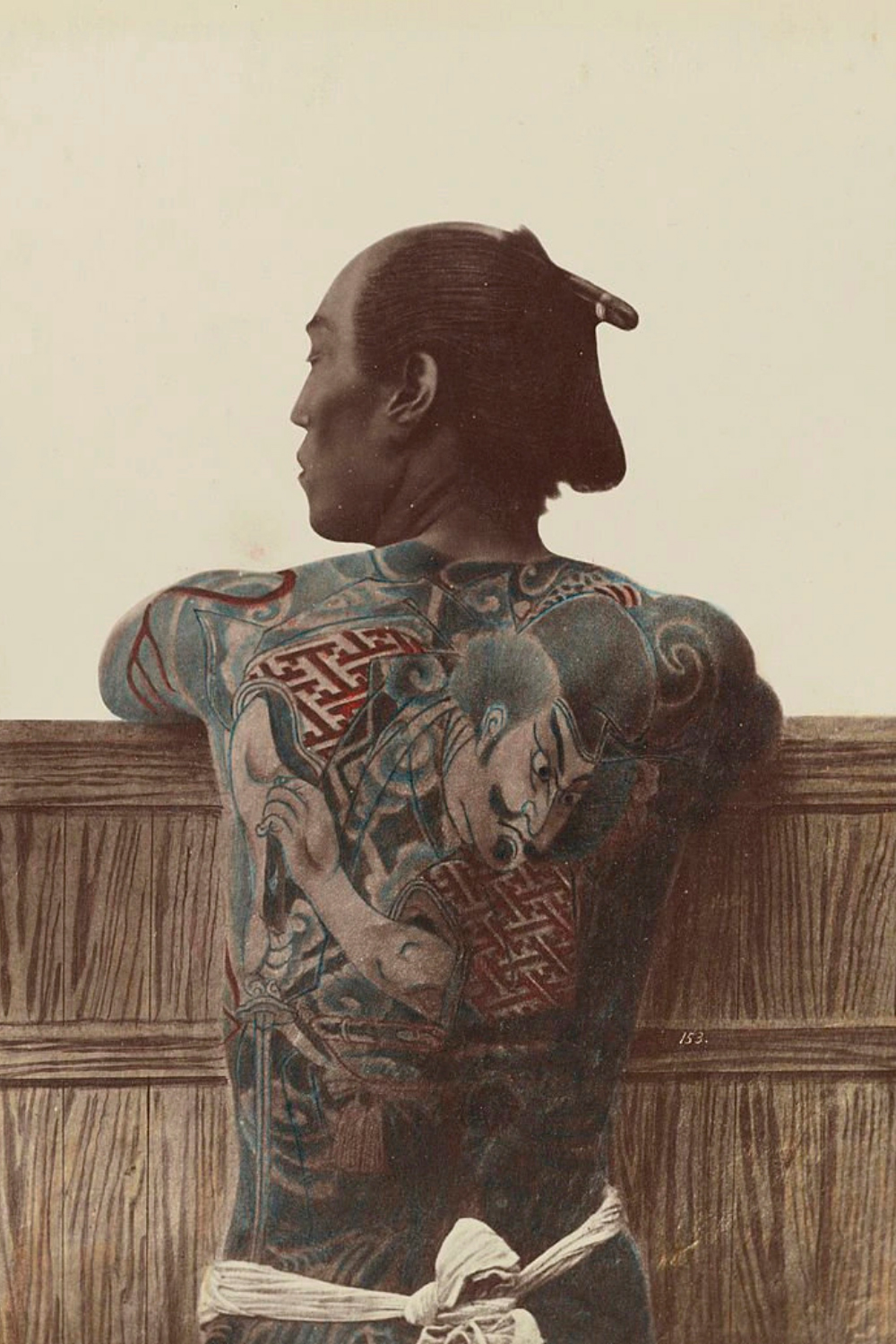
The history of this craft is a chain of painters, printers, and carvers. The visual DNA of Japanese traditional tattoos was shaped by Ukiyo-e masters like Utagawa Kuniyoshi, whose dramatic rebel prints defined how dragons and warriors should move, and Tsukioka Yoshitoshi, who brought psychological intensity, ghosts, and supernatural tension into the imagery.
Among the most influential names in modern Irezumi is the Horiyoshi lineage, whose masters helped preserve and refine traditional Japanese tattooing during a period when the craft remained largely underground. Their mastery of Gakubori, the sweeping backgrounds of wind, waves, and clouds that unify an entire composition, became one of the defining characteristics of classical Irezumi. Fittingly, the title Hori itself means “to carve,” reflecting a philosophy that has always treated the body less like a canvas and more like a living surface shaped over time.
A Japanese traditional tattoo is not simply a collection of cool symbols. The background is what turns the tattoo into a complete world. Wind bars, waves, and negative space create rhythm, direct the eye, and allow the main subject to breathe. When planning full compositions, choosing the right motifs and respecting their natural logic, including seasonality, is essential.
Ask ten collectors which subject never loses its power and the dragon, or Ryu, will almost always enter the conversation first. Representing wisdom and power over water, its serpentine body naturally follows the curves of the arms, ribs, and back.
The Koi fish tells a different story. Swimming against powerful currents, it has become a symbol of perseverance and personal evolution, often paired with dramatic waves that reinforce its relentless journey upstream.
For full-body work or back pieces, the Samurai acts as a grounded centerpiece, carrying themes of honor, discipline, and sacrifice. The Hannya mask offers another layer of emotional complexity, representing jealousy and rage transformed into a demonic form. Depending on the viewing angle, its expression can shift from fury to sorrow, making it one of the most compelling motifs in Japanese tattooing.
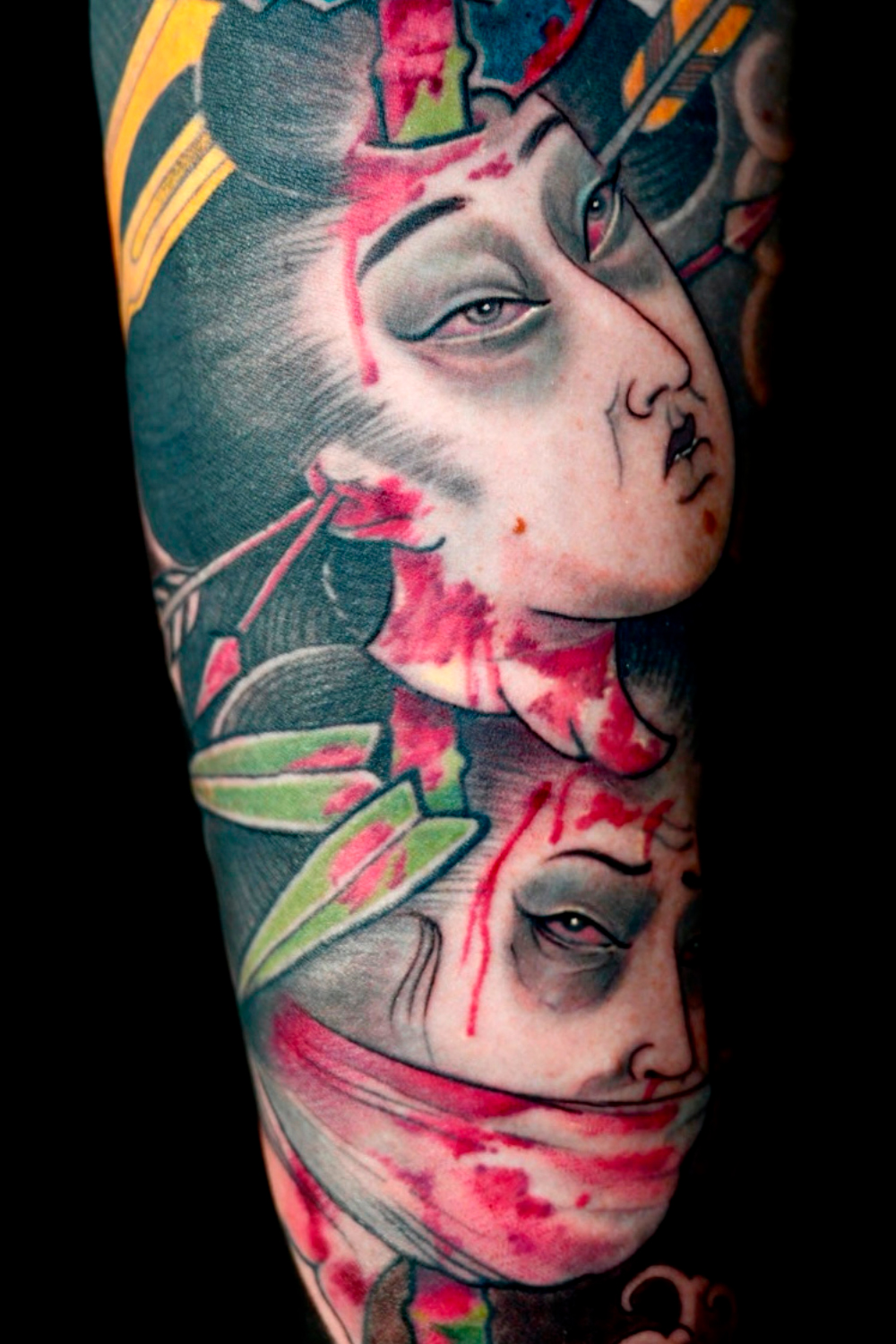
Unlike many tattoo trends that come and go, Irezumi has remained remarkably consistent in the way serious collectors approach it. Musicians, actors, and tattoo enthusiasts have embraced it not because it’s fashionable, but because its scale and visual language demand commitment.
Rock musicians embraced Irezumi long before social media turned tattoo collecting into a global trend. Nikki Sixx helped popularize expansive Japanese-inspired work in Western rock culture, carrying warriors and traditional dragons across his torso and limbs. Years later, artists like John Mayer and Post Malone introduced new generations to this visual language, displaying large-scale Japanese pieces on some of the world’s biggest stages.
Their collections reinforced what Japanese tattooing has always done best: telling one continuous story across the body instead of relying on isolated pieces.

Modern equipment allows artists to pack solid blacks and vibrant colors with greater consistency, making long sessions more efficient than ever before. High-quality pigments also help maintain the richness of reds, blues, and blacks over time when paired with proper application and aftercare.
Yet, despite these technical advances, the artistic principles behind Irezumi remain virtually unchanged. The equipment is only as good as the artist using it. If wind bars are placed at the wrong angle, they can distort the body’s natural flow. If the waves ignore the underlying musculature, the composition loses its sense of movement. Successful Japanese tattooing depends on folklore, anatomy, spatial planning, and an understanding of how the artwork will age.
Those principles have only become more valuable as collectors seek artists capable of designing full-body work with the same discipline that defined classical Irezumi.
That’s one of the reasons Tampa has quietly become a destination for collectors searching for custom Japanese tattoos. At The Secret Tattoo Studio, Japanese traditional tattooing is approached with deep cultural respect and technical precision. Our artists continue refining their craft through large-scale custom projects, studying the classical rules of composition while designing pieces that feel personal, balanced, and built to last.
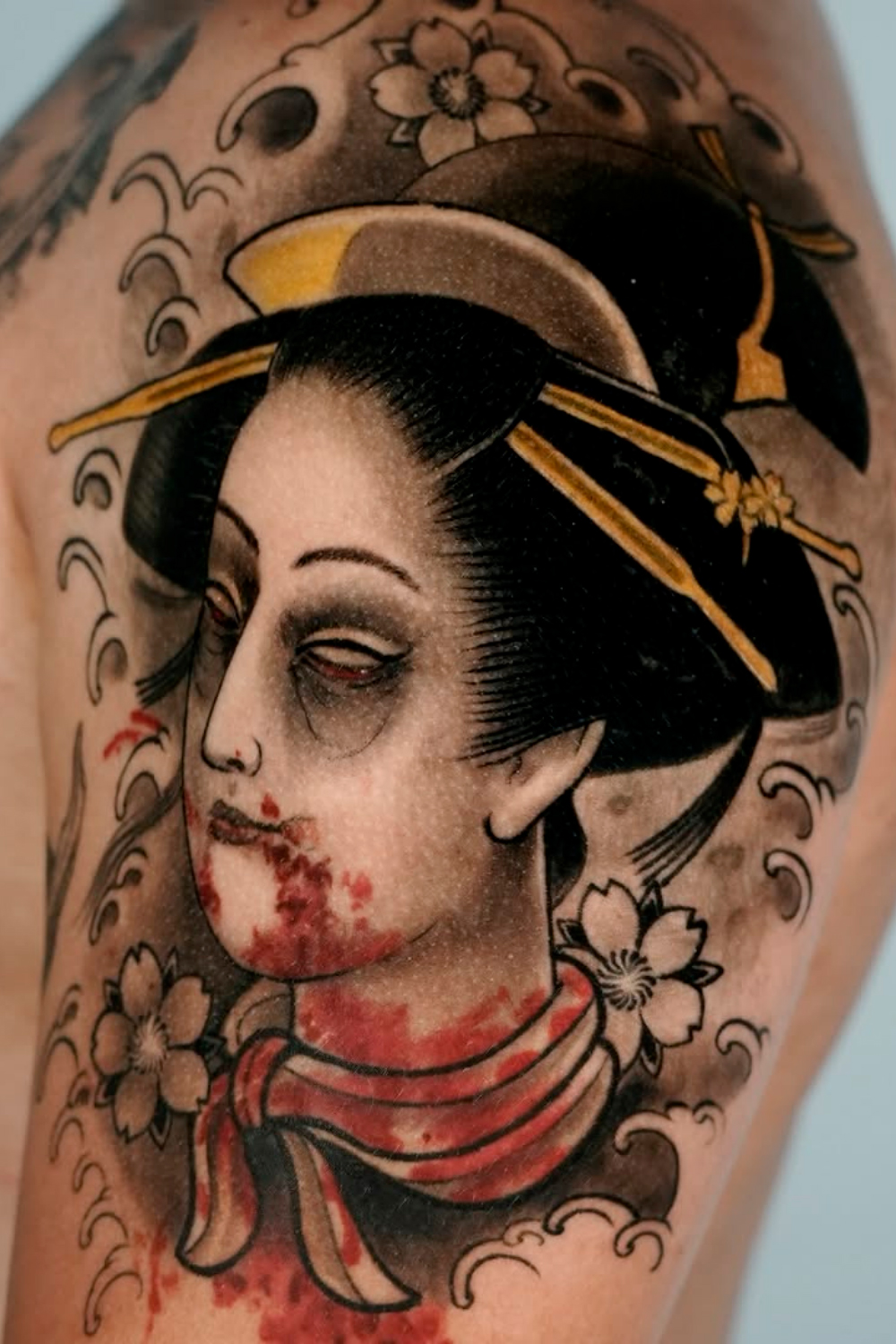
A Japanese sleeve or back piece is not an impulse purchase. It is a collaboration between collector and artist. True Irezumi needs room to breathe, and the background is every bit as important as the central figure.
Every Japanese traditional tattoo begins long before the first line is drawn. It starts with a conversation about symbolism, composition, and how the artwork will live on your body for decades.
Every collector remembers the day they started their first Japanese tattoo. Very few ever stop at one.
If you’re ready to begin a custom Japanese tattoo in Tampa, our artists at The Secret Tattoo Studio are ready to help you design a piece rooted in tradition and built specifically for you.
Book your consultation and let’s start planning something designed to age beautifully.
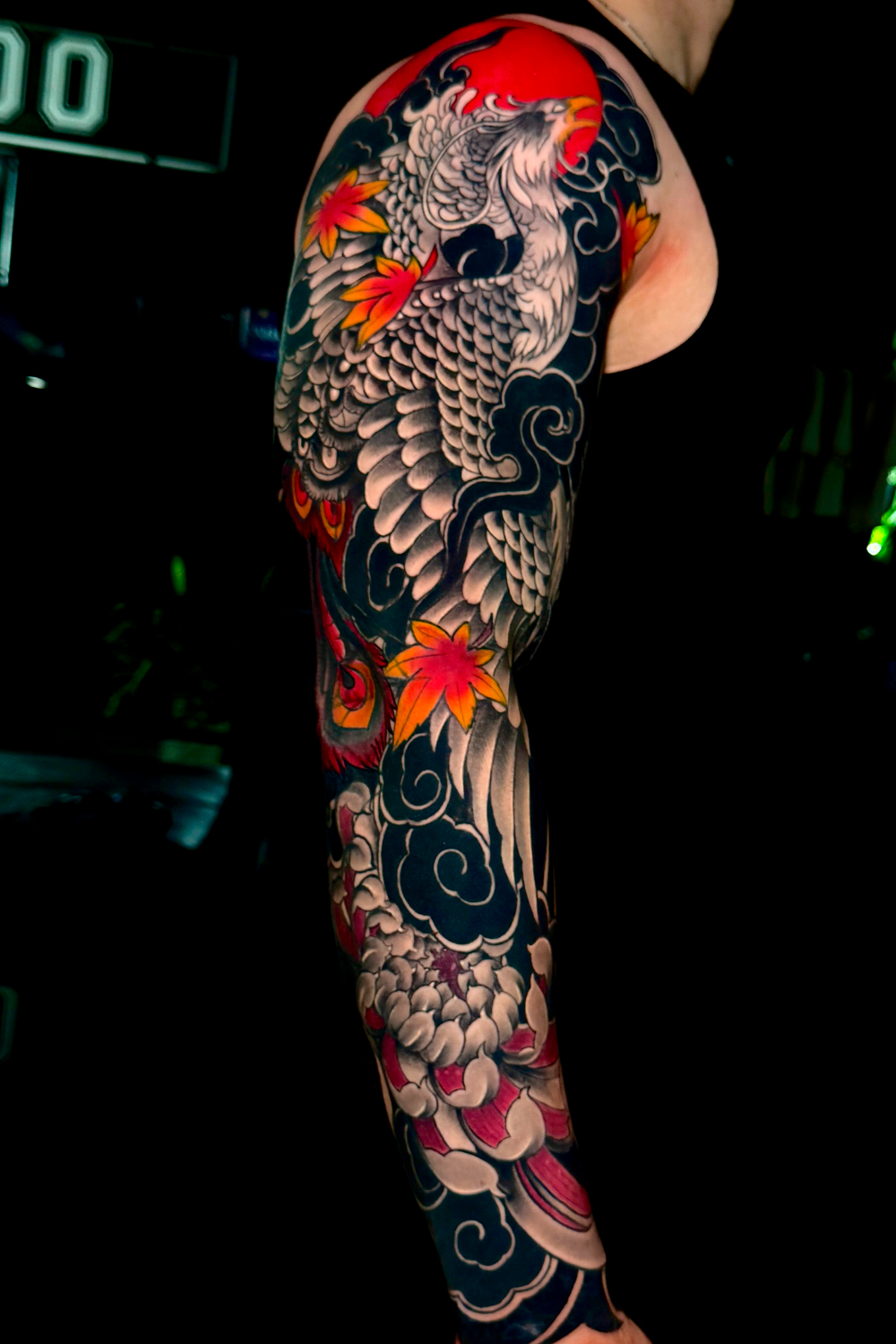
Because Irezumi relies on extensive background work, layered shading, and multiple color passes, a custom sleeve cannot be rushed. Most projects require 25 to 40+ hours, spread across multiple sessions depending on the complexity of the design and how your skin heals.
Yes, although the best results come from careful planning. Many collectors combine Japanese-inspired backgrounds with black and gray realism, provided the overall composition is designed as a single piece rather than separate tattoos.
Unlike many Western depictions, the Japanese dragon, or Ryu, symbolizes wisdom, protection, good fortune, and mastery over the natural elements. It remains one of the most enduring motifs in Japanese tattooing.
Large-scale projects such as sleeves, back pieces, and body suits are custom investments. Pricing depends on the design, placement, size, and number of sessions required. The most accurate estimate is provided during a private consultation after the concept has been fully developed.